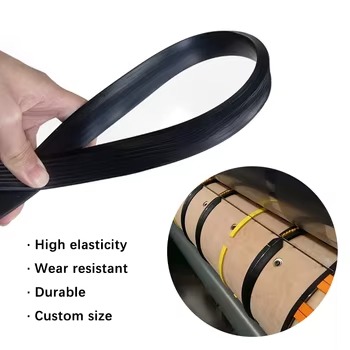
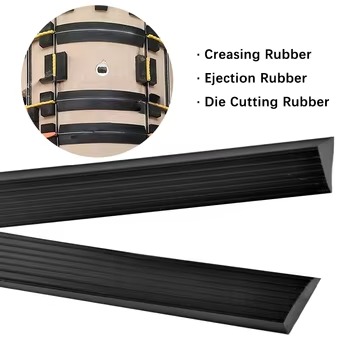
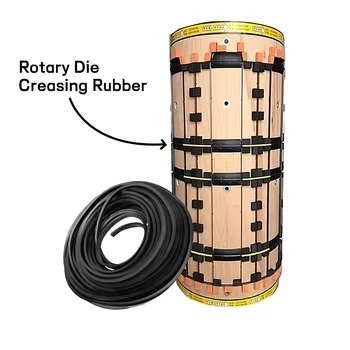
This standard operating procedure (SOP) is intended for the production team applying our rubber sponge strips to customer-supplied or in-process die boards, ensuring a permanent and functional bond that meets performance specifications.
The adhesive must be compatible with both the sponge material (e.g., EVA, PU) and the plywood substrate. The recommended and approved adhesive for this operation is:
Chloroprene Rubber Contact Adhesive (Solvent-Based Yellow Glue)
PVA (White Glue): Does not provide a permanent bond for this application.
Cyanoacrylate (Instant Glue/“502”): Causes sponge deterioration and bond failure.
Non-approved Spray Adhesives: Generally lack the required shear strength and longevity.
Reason for Specification: This adhesive forms a strong, flexible bond layer that matches the long-term durability and elasticity of our sponge products.
Prohibited Adhesives:
The bonding surface of the plywood die board must be clean, dry, and free from dust, oil, or previous adhesive residue.
If the surface is overly smooth or glazed, it must be lightly sanded to create a mechanical key for the adhesive.
The bottom surface of the sponge strip must be clean and free of loose particles.
Apply a thin, even coat of the specified yellow glue to both the die board bonding area and the bottom of the sponge strip
Key Quality Control Point: The glue must form a complete surface film without deep penetration into the sponge's cellular structure. Deep penetration will cause localized hardening, compromising the sponge's stripping function and overall product performance.
Allow the coated surfaces to air-dry until tacky to the touch (approx. 1-3 minutes under standard workshop conditions). Do not bond while the adhesive is still wet.
Align the sponge strip carefully and place it onto the die board in one deliberate motion.
Immediately apply firm, even pressure across the entire bonded area using a hand roller or similar tool.
For large-area sponge applications, place a flat board and a weighted object on top to maintain consistent pressure for 10-20 minutes.
Allow the bonded assembly to cure for the time specified by the adhesive manufacturer (typically several hours) before subjecting it to operational stress.
Low Temperature: If workshop temperature is below the adhesive's recommended application range, the adhesive container may be gently warmed in a controlled manner (e.g., warm water bath) to restore viscosity and activity. Do not use open flames.
Material-Specific Handling:
High-Density EVA: Bonds readily with standard glue application.
Open-Cell PU Foam: Highly absorbent. Use a slightly reduced, controlled glue amount to prevent over-penetration as specified above.
Send an inquiry right now, our sales will reply with the price within 12 hours.