In die-cutting consumables, stripping foam is often underestimated.
At first glance, many die-cutting foams look almost identical: similar color, similar appearance, and similar nominal specifications. This leads many buyers to assume that performance—and therefore price—should also be the same.
In reality, the true difference lies in tolerance control, and that difference directly affects stripping performance, die stability, and total production cost.
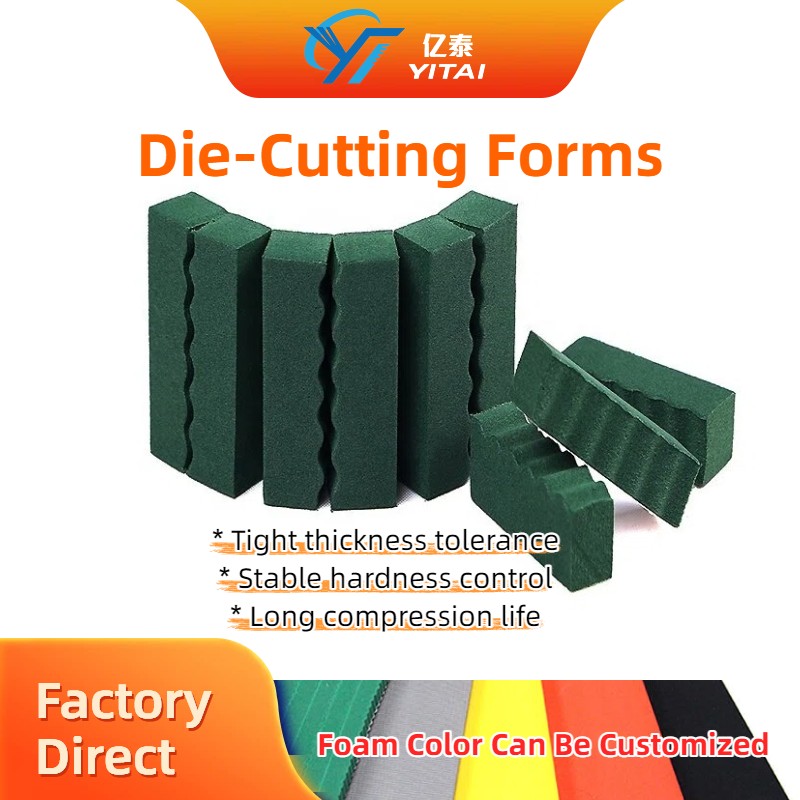
Even when two foams look alike, their internal material systems can be completely different.
High-quality die-cutting foams typically use:
High-resilience virgin materials
Uniform, controlled cell structures
Lower-grade foams often rely on:
Standard or recycled materials
Uneven cell distribution
Raw material quality determines how foam behaves after repeated compression, not just its initial height. Stable rebound over time starts with the right material base.
Foam thickness is rarely “exactly as labeled.”
Typical tolerance differences:
Standard foam: thickness variation of ±0.5 mm or more
High-quality foam: controlled tolerance, usually within ±0.2 mm or tighter
What inconsistent thickness causes in production:
Insufficient stripping in some areas → waste does not release cleanly
Excessive stripping force in other areas → early foam collapse
Repeated shimming and machine adjustments on the same die
What seems like a tiny difference in thickness can directly determine die stability and stripping reliability.
Many foams list hardness values—but the real issue is hardness consistency.
Low-end foam: noticeable hardness variation along the same strip
High-standard foam: tightly controlled hardness tolerance throughout
Unstable hardness leads to:
Uneven stripping force
Imbalanced cutting pressure
Localized fatigue and early loss of elasticity
A truly reliable die-cutting foam delivers predictable rebound force, every cycle, across the entire die.
In high-speed, high-frequency die-cutting:
Foams with large thickness or hardness variation fail first at their weakest points
Foams with tight tolerances age uniformly and provide a predictable replacement cycle
This is why price differences reflect effective service life, not just one-time use.
Low-priced foams often bring hidden risks:
Inconsistent performance between batches
Difficulty reordering the “same” specification
Customer complaints that are hard to trace
High-quality die-cutting foams offer:
Stable thickness tolerance
Controlled hardness tolerance
Repeatable and predictable die-cutting results
Die-cutting foams may look similar.
The real differences are hidden in thickness and hardness tolerances.
Compare prices when purchasing—but calculate total cost in production.
The right foam makes die-cutting stable, efficient, and predictable.
Send an inquiry right now, our sales will reply with the price within 12 hours.